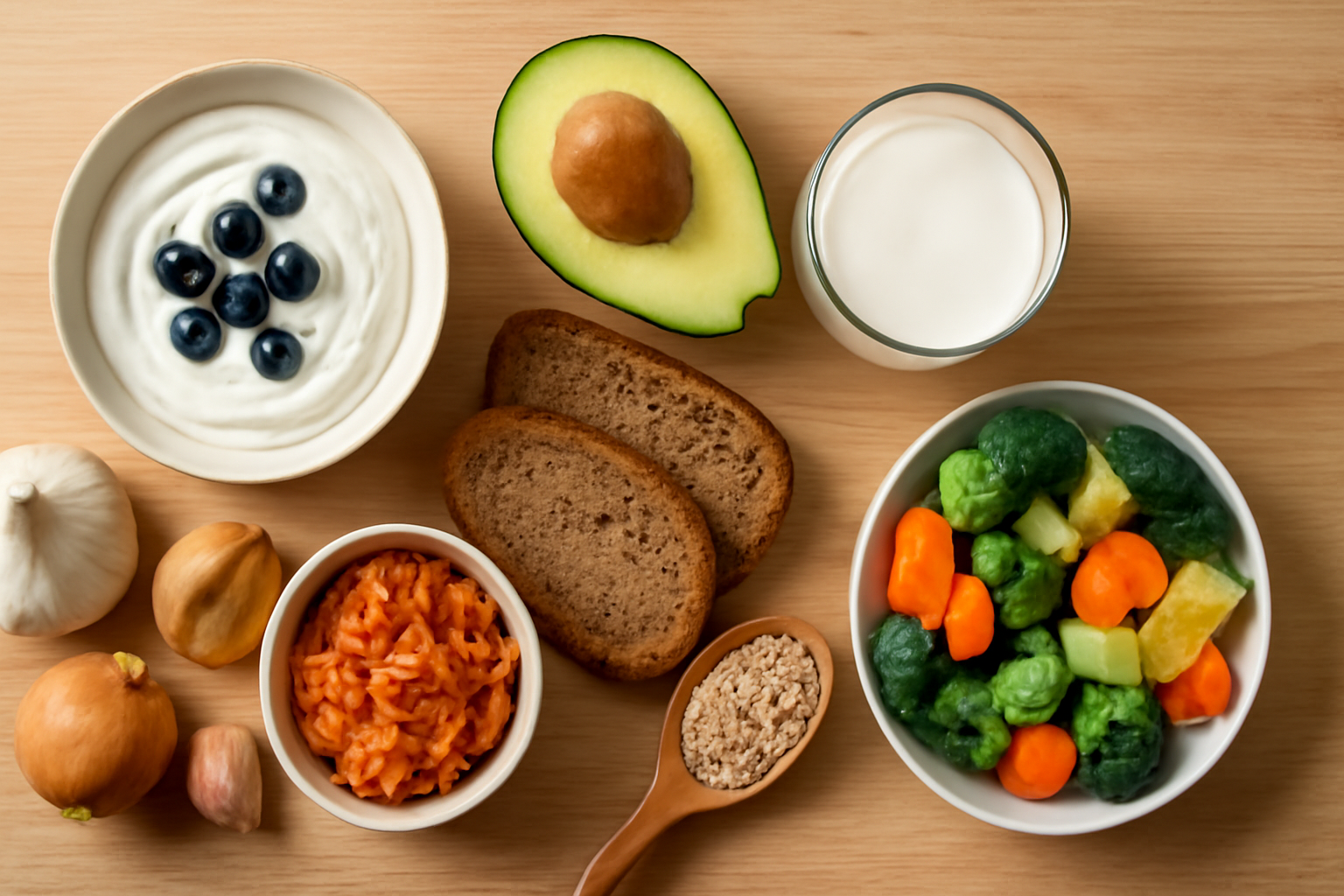
How to Balance Your Gut Microbiome for Better Health
Your digestion, energy, mood, and immunity are all quietly shaped by trillions of microorganisms living inside you — and most people have no idea how to keep them working in their favor.
Have you ever finished a meal and felt inexplicably exhausted, bloated, or mentally foggy — even though you ate something you thought was healthy? Or noticed that your mood tanks when your digestion is off? You’re not imagining things. There’s a direct connection between what’s happening in your gut and how you feel from head to toe.
Your gut microbiome — a vast ecosystem of bacteria, fungi, and other microorganisms living in your digestive tract — plays a role in nearly every major system in your body. When it’s balanced, you tend to feel energized, clear-headed, and resilient. When it’s disrupted, everything from your immune response to your sleep quality can suffer.
The good news: you don’t need expensive treatments or complicated protocols to support gut microbiome balance. In this guide, you’ll learn what the science actually says, what’s disrupting your gut without you realizing it, and the practical, everyday steps that make a real difference — starting today.
Why Your Gut Microbiome Matters More Than You Think
Most people think of gut health as just about digestion — avoiding bloating, staying regular, not having stomach cramps. But research over the last two decades has revealed something far more significant: your gut microbiome is deeply connected to your immune system, brain function, hormone regulation, and even your risk for chronic disease.
According to the National Institutes of Health, the human gut hosts an estimated 38 trillion microbial cells — roughly equal to the number of human cells in the entire body. These microorganisms help digest food, produce vitamins (including B12 and K), train your immune system, and synthesize neurotransmitters like serotonin. In fact, research estimates that approximately 90% of your body’s serotonin is produced in the gut, which helps explain the powerful gut-brain connection many people experience firsthand.
A landmark study published in Nature found that individuals with more diverse gut microbiomes tended to have better metabolic health, stronger immune responses, and lower levels of systemic inflammation. Diversity — meaning a wide variety of different microbial species — appears to be one of the key markers of a healthy gut.
The takeaway: gut microbiome balance isn’t a niche wellness trend. It’s a foundational pillar of whole-body health that deserves real attention.
The Science Behind How Your Gut Microbiome Works
Your gut microbiome begins forming at birth and continues to change throughout your life based on diet, lifestyle, medications, stress, and environment. By adulthood, your microbial profile is largely unique to you — shaped by years of exposures, habits, and choices.
Inside your gut, different bacterial species compete and cooperate in a complex balancing act. Beneficial bacteria (like Lactobacillus and Bifidobacterium strains) help maintain the gut lining, crowd out harmful pathogens, and keep inflammation in check. When beneficial species decline and harmful ones overgrow, a state called dysbiosis can occur — and that’s when symptoms start to appear.
Common myth busted: Many people assume that taking a probiotic supplement alone is enough to fix an imbalanced gut. But according to a review published in Cell, probiotics may not colonize the gut long-term in many individuals. Their benefits are real but often temporary unless paired with dietary changes that feed and sustain beneficial bacteria. In other words, what you feed your microbiome matters just as much as — if not more than — what you add to it.
Short-chain fatty acids (SCFAs) like butyrate, acetate, and propionate are produced when gut bacteria ferment dietary fiber. These compounds are critical: they nourish the cells lining your colon, regulate immune function, and have been linked to reduced risk of colorectal cancer, according to research published in the Journal of Nutrition. Without adequate fiber, SCFA production drops — and the downstream effects can be significant.
How to Start Rebalancing Your Gut: Practical Steps
Getting your gut microbiome into better balance doesn’t require a dramatic overhaul. Consistent, moderate changes in diet and lifestyle tend to produce more sustainable results than short-term extreme interventions. Here’s where to begin:
1. Increase dietary fiber — gradually
Aim for 25–38 grams of fiber per day, as recommended by the Academy of Nutrition and Dietetics. If you’re currently eating far less, increase slowly to avoid gas and bloating. Focus on variety: legumes, oats, vegetables, fruits, and whole grains each feed different bacterial species.
2. Add fermented foods to your daily routine
Foods like plain yogurt, kefir, sauerkraut, kimchi, miso, and tempeh introduce live bacteria into your gut. A 2021 study published in Cell by researchers at Stanford found that a diet high in fermented foods significantly increased microbiome diversity and reduced inflammatory markers over 10 weeks.
3. Prioritize prebiotic-rich foods
Prebiotics are the fibers that feed beneficial bacteria. Top sources include garlic, onions, leeks, asparagus, bananas (especially slightly unripe ones), oats, and Jerusalem artichokes. Aim to include at least one prebiotic food in most of your meals.
Intermediate step: Track your "plant points" — the number of different plant foods you eat per week. Research featured in the American Gut Project suggests that eating 30 or more different plant foods per week is associated with significantly higher microbial diversity.
Advanced step: Consider working with a registered dietitian trained in gut health to identify specific dietary patterns that may be contributing to your symptoms, especially if you deal with IBS, food sensitivities, or chronic digestive issues.
Common Mistakes That Sabotage Gut Microbiome Balance
Even well-intentioned people make these gut health mistakes regularly. Recognizing them is the first step to avoiding them.
Mistake 1: Overusing antibiotics or relying on them unnecessarily
Antibiotics save lives — but they also wipe out beneficial gut bacteria alongside harmful ones. According to the Mayo Clinic, it can take the gut microbiome months to recover from a single course of antibiotics. If you’ve had multiple rounds in recent years, your microbiome may be more depleted than you realize. Always use antibiotics only when medically necessary, and consider pairing them with probiotics (take them a few hours apart) after discussing with your doctor.
Mistake 2: Eating too little fiber — consistently
Most American adults eat only about 15 grams of fiber per day — less than half the recommended amount, according to the USDA Dietary Guidelines. Beneficial gut bacteria literally starve without adequate fiber. The fix is straightforward: add one high-fiber food to each meal. A handful of berries at breakfast, lentils at lunch, roasted vegetables at dinner.
Mistake 3: Chronic stress without management strategies
The gut-brain axis is bidirectional — stress doesn’t just affect your mind, it directly alters gut bacteria composition. Research published in Psychosomatic Medicine has shown that chronic psychological stress can reduce populations of beneficial bacteria and increase gut permeability. If stress is constant and unmanaged, no amount of dietary changes will fully compensate. Exploring daily habits that reduce stress can be a meaningful complement to any gut health strategy.
Mistake 4: Skipping sleep consistently
Your gut microbiome follows a circadian rhythm, just like you do. The National Sleep Foundation notes that disrupted sleep patterns can alter gut bacterial composition within days. Irregular sleep schedules — including frequent late nights and inconsistent wake times — may impair microbial diversity over time.
Mistake 5: Relying on ultra-processed foods as dietary staples
Emulsifiers, artificial sweeteners, and preservatives commonly found in ultra-processed foods have been shown in animal and emerging human studies to disrupt the gut lining and alter microbial populations. These foods aren’t inherently forbidden, but making them the backbone of your diet creates a consistently unfavorable environment for beneficial bacteria.
What to Eat — and What to Cut Back On — for a Healthier Microbiome
Eat more of:
- Legumes (lentils, chickpeas, black beans): ½ cup cooked provides 6–8g of fiber plus resistant starch
- Fermented dairy (kefir, plain yogurt with live cultures): 1 serving daily
- Vegetables of varied colors: aim for 3–5 different types per day
- Whole grains (oats, barley, farro): choose minimally processed versions
- Nuts and seeds (walnuts, flaxseeds, chia): 1–2 tablespoons of seeds or a small handful of nuts daily
- Polyphenol-rich foods (blueberries, dark chocolate with 70%+ cocoa, green tea, extra-virgin olive oil): polyphenols act as fuel for beneficial bacteria
For a more comprehensive breakdown of the best foods for your gut, check out this guide on the best gut health foods to eat every day.
Cut back on:
- Alcohol in excess: more than 1–2 drinks per day has been linked to microbial imbalance and increased intestinal permeability
- Added sugars: high sugar intake feeds less beneficial bacterial strains
- Highly processed red and deli meats as daily staples: associated with less favorable microbiome profiles in large population studies
- Artificial sweeteners: emerging research suggests some (like saccharin and sucralose) may negatively alter gut bacteria — results are still evolving, so moderation is reasonable
It’s also worth noting that gut health and systemic inflammation are closely linked. If you’re curious about how diet affects inflammation more broadly, the anti-inflammatory diet guide offers practical complementary strategies.
How Long Until You Notice a Difference — and What to Track
This is one of the most common questions — and the honest answer is: it depends. Results vary significantly based on your current microbiome state, how much you change, and individual biology.
That said, research offers some useful benchmarks. The Stanford fermented foods study mentioned earlier showed measurable changes in microbiome diversity within 10 weeks of consistent dietary changes. Some people report improvements in bloating, regularity, and energy within 2–4 weeks of adding more fiber and fermented foods. Mood-related changes, if they occur, often take longer — sometimes 6–12 weeks.
Practical signals to track:
- Stool consistency and frequency (Bristol Stool Scale is a useful reference)
- Bloating patterns — when it occurs, how severe, what seems to trigger it
- Energy levels throughout the day, especially post-meal
- Sleep quality and mental clarity
- How quickly you feel full and how satisfied you feel after eating
If you experience persistent symptoms — including severe bloating, chronic diarrhea or constipation, unexplained weight changes, or blood in stool — these warrant a conversation with your healthcare provider. Gut microbiome imbalance can sometimes be a symptom of an underlying condition that needs proper diagnosis.
Frequently Asked Questions
Do I need to take a probiotic supplement to improve my gut microbiome?
Not necessarily. Whole food sources of probiotics (yogurt, kefir, kimchi, sauerkraut) are well-supported and accessible. Probiotic supplements can be helpful — particularly after antibiotic use or for specific conditions — but the evidence varies by strain and health goal. Consult a registered dietitian or your doctor for personalized guidance.
Can stress really damage my gut health?
Yes, and significantly. The gut-brain axis is a well-documented two-way communication system. Chronic stress elevates cortisol, which can increase gut permeability, reduce beneficial bacteria, and trigger or worsen digestive symptoms. Managing stress isn’t optional if you’re serious about gut health.
Is it normal to feel worse (more bloated) when I first increase fiber?
Very common, especially if you increase fiber quickly. Your gut bacteria need time to adapt to increased fermentation activity. Increase fiber gradually over 2–3 weeks and stay well hydrated. The initial bloating typically subsides as your microbiome adjusts.
Are gut microbiome tests worth it?
At-home microbiome testing kits can be interesting, but their clinical utility is currently limited. The science of translating microbiome data into specific health recommendations is still evolving. They may provide useful insights but should not replace professional medical evaluation for digestive concerns.
How does gut health relate to hormones?
There’s a meaningful connection. The gut microbiome plays a role in metabolizing and recycling estrogen through a collection of bacteria sometimes called the "estrobolome." Dysbiosis may contribute to hormonal imbalances in some individuals. If you’re exploring the broader hormone connection, the article on hormonal balance for women offers relevant context.
Start Small, Stay Consistent
Balancing your gut microbiome isn’t about following a perfect protocol or taking a dozen supplements. It’s about making consistent, intentional choices that create a better environment for the trillions of microorganisms that quietly run so much of your health behind the scenes.
Start with one change this week: add a fermented food to one meal each day, or swap a processed snack for something fiber-rich. Small wins compound over time. Your gut microbiome responds to what you do consistently — not what you do perfectly once in a while.
The best time to start supporting your gut health was years ago. The second best time is today.
This article is for informational and educational purposes only. The content is not intended to replace professional medical, nutritional, or fitness advice. Always consult a qualified healthcare provider, registered dietitian, or certified fitness professional before starting a new health program or making significant changes to your lifestyle.
Content reviewed by our wellness editorial team, with references to peer-reviewed research and guidelines from leading health organizations.
Leave a Reply