You’ve been eating well, sleeping enough, and even exercising — so why do you still feel bloated, sluggish, or just off? The answer might be living in your gut.
Here’s a surprising reality: roughly 70% of your immune system is housed in your gut. According to research published in Nature Reviews Immunology, the gut microbiome — the trillions of bacteria, fungi, and microorganisms living in your digestive tract — plays a central role not just in digestion, but in immunity, mental health, energy levels, and even how well you sleep.
And yet, most people still think gut health is only about avoiding stomach cramps or managing IBS. The truth is far bigger than that.
In this article, you’ll discover the best gut health foods that science actually supports, how they work inside your body, common mistakes that undermine your microbiome, and a realistic timeline for what to expect when you start making changes. No gimmicks, no extreme protocols — just practical, evidence-based nutrition you can start today.
Why Gut Health Matters More Than You Think
Your gut is often called your "second brain" — and for good reason. The enteric nervous system, a network of over 100 million nerve cells lining your gastrointestinal tract, communicates directly with your brain through what’s known as the gut-brain axis.
This bidirectional connection means that what happens in your gut doesn’t stay in your gut. Research published in JAMA Psychiatry found associations between gut microbiome diversity and reduced rates of depression and anxiety. When your gut flora is imbalanced — a state called dysbiosis — it can trigger systemic inflammation, disrupt hormone production, and even impair cognitive function.
Beyond mental health, the Academy of Nutrition and Dietetics notes that a well-nourished gut microbiome supports better nutrient absorption, strengthens the intestinal lining, regulates blood sugar, and may reduce the risk of chronic diseases including type 2 diabetes and cardiovascular disease.
The foods you eat are the single most powerful lever you have to shape your gut microbiome — and the good news is, meaningful changes can begin within days of shifting your diet.
How Your Gut Microbiome Actually Works
Think of your gut microbiome like a complex ecosystem — similar to a rainforest. The more diverse the species, the more resilient and functional the system. When diversity drops, harmful bacteria can take over, inflammation rises, and the gut lining becomes more permeable (sometimes called "leaky gut," though the clinical picture is still being studied).
Here’s the key mechanism: beneficial gut bacteria thrive on prebiotics — specific types of dietary fiber that humans can’t digest but bacteria can ferment. This fermentation process produces short-chain fatty acids (SCFAs) like butyrate, propionate, and acetate. SCFAs are critical — they fuel the cells lining your colon, reduce intestinal inflammation, and regulate appetite hormones.
A landmark study published in Cell by researchers at Stanford University found that a high-fiber diet increased microbiome diversity, while a high-fermented food diet reduced inflammatory markers more acutely. Both approaches showed meaningful benefits — suggesting that combining fiber-rich and fermented foods is a powerful strategy.
Common myth to bust: More probiotics (from supplements) always equals a healthier gut. Not true. The research on probiotic supplements is promising but mixed. According to the NIH, strain specificity matters enormously — a probiotic that works for one condition may have no effect on another. Whole food sources of probiotics tend to deliver a broader range of strains alongside other beneficial compounds.
The Best Gut Health Foods to Add to Your Plate
This is where the science meets your kitchen. The following foods are backed by clinical research and consistently recommended by the Academy of Nutrition and Dietetics and gut health researchers worldwide.
1. Fermented Foods (Natural Probiotics)
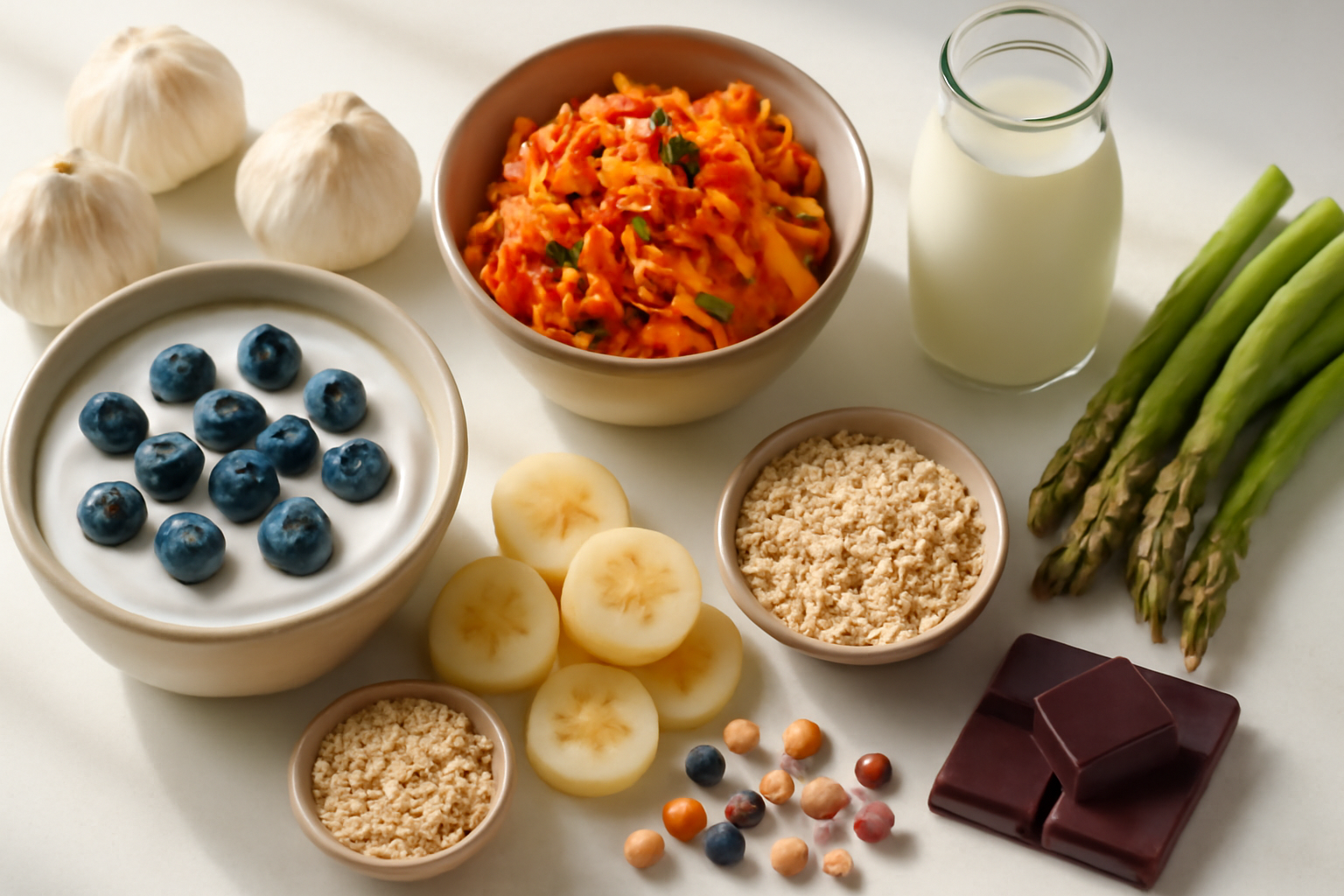
Fermented foods deliver live beneficial bacteria directly to your digestive tract. The most research-supported options include:
- Plain, unsweetened yogurt with live and active cultures — aim for at least 1 cup daily
- Kefir — a fermented milk drink shown in a Journal of Nutrition study to significantly improve lactose digestion and increase gut bacteria diversity
- Sauerkraut and kimchi — fermented cabbage dishes rich in Lactobacillus strains; go for unpasteurized versions found in the refrigerated section
- Miso and tempeh — fermented soy products that also deliver plant-based protein
- Kombucha — fermented tea with beneficial acids and modest probiotic content; choose low-sugar versions
2. High-Fiber Prebiotic Foods
Without prebiotic fiber, even the best probiotic bacteria won’t survive long in your gut. These foods feed your microbiome:
- Garlic and onions — among the richest sources of inulin, a powerful prebiotic fiber
- Leeks, asparagus, and Jerusalem artichokes — all high in fructooligosaccharides (FOS)
- Bananas (slightly underripe) — contain resistant starch, which feeds beneficial bacteria
- Oats — rich in beta-glucan, a soluble fiber linked to improved microbiome balance and reduced LDL cholesterol (per the USDA Dietary Guidelines)
- Legumes — beans, lentils, and chickpeas are among the most potent prebiotic foods available; aim for ½ cup cooked servings, 3–5 times per week
3. Polyphenol-Rich Foods
Polyphenols are plant compounds that act as fuel for beneficial gut bacteria. Harvard Health Publishing highlights that people who consume diets rich in polyphenols show greater microbiome diversity. Key sources include:
- Blueberries, raspberries, and blackberries
- Dark chocolate (70% cacao or higher, 1 oz serving)
- Extra virgin olive oil
- Green and black tea
- Red grapes and pomegranate
Common Mistakes That Sabotage Your Gut Health
Even well-intentioned eaters make these errors. Recognizing them is the first step to correcting course.
Mistake #1: Eating too little fiber, too inconsistently. The USDA Dietary Guidelines recommend 25–38 grams of fiber per day for adults, but the average American consumes only about 15 grams. Sporadic fiber intake doesn’t give gut bacteria enough consistent fuel to thrive. Fix: Build fiber in gradually — sudden large increases can cause gas and bloating. Add one fiber-rich food per meal over two to three weeks.
Mistake #2: Over-relying on probiotic supplements while ignoring diet. Taking a daily probiotic pill while eating a diet high in ultra-processed foods, refined sugar, and low fiber is like planting seeds in concrete. Research in Cell Host & Microbe showed that post-antibiotic microbiome recovery was actually slower in people who took standard probiotic supplements compared to those who allowed natural recovery with a diverse diet. Fix: Prioritize food-first probiotics and pair them with prebiotic-rich meals.
Mistake #3: Too much added sugar and ultra-processed food. Sugar feeds harmful bacterial strains and promotes dysbiosis. A diet high in ultra-processed foods — even ones marketed as "healthy" — has been linked in a BMJ study to reduced microbiome diversity. Fix: Read ingredient labels and aim to minimize foods with added sugars above 5g per serving as a daily habit.
Mistake #4: Chronic stress without a management strategy. This one surprises people. The gut-brain axis runs both ways — chronic psychological stress directly alters gut bacteria composition and increases intestinal permeability. The American Psychological Association confirms that stress hormones like cortisol can disrupt microbial balance. Fix: Incorporate even 10 minutes of daily breathwork, walking, or mindfulness to buffer stress effects on the gut.
Mistake #5: Not drinking enough water. Fiber needs water to do its job. Without adequate hydration, increased fiber intake can worsen constipation rather than improve it. The Mayo Clinic recommends approximately 3.7 liters (about 125 oz) of total daily water intake for men and 2.7 liters (about 91 oz) for women from all sources.
What to Eat (and What to Scale Back) for a Healthier Gut
Think of this less as a strict diet and more as a daily framework.
Prioritize daily:
- At least 2–3 servings of vegetables, especially non-starchy varieties like broccoli, spinach, and artichokes
- 1 serving of fermented food (yogurt, kefir, sauerkraut, or kimchi)
- 1–2 servings of legumes or whole grains per day
- A variety of colorful fruits — diversity matters more than quantity
Scale back significantly:
- Processed meats (deli meats, sausages) — associated with lower microbiome diversity in multiple cohort studies
- Artificial sweeteners — particularly sucralose and saccharin, which a study in Nature found to alter gut bacteria composition in some individuals
- Excessive alcohol — even moderate drinking consistently disrupts gut flora balance according to research from the NIH
- Refined carbohydrates and packaged snack foods with long ingredient lists
The USDA Dietary Guidelines and the Academy of Nutrition and Dietetics both emphasize that there’s no single gut health diet — what matters is overall pattern: high variety, high fiber, minimally processed, and rich in plant diversity.
How Long Until You Notice a Difference?
Here’s the honest answer: it depends on your starting point, and results vary significantly from person to person.
That said, research offers some helpful benchmarks. The Stanford Cell study mentioned earlier found that measurable changes in microbiome composition began appearing within just one to two weeks of dietary changes. Improvements in bloating, stool consistency, and energy are often the first things people notice.
For more systemic changes — reduced inflammatory markers, better immune response, improved mood regulation — expect a timeline of four to twelve weeks of consistent dietary shifts. The key word is consistent. The gut microbiome is highly responsive but also highly reactive to backsliding.
What to track:
- Stool regularity and consistency (a basic but reliable gut health signal)
- Bloating frequency and severity after meals
- Energy levels in the afternoon (a gut-energy connection is well documented)
- Sleep quality — gut bacteria produce precursors to serotonin and melatonin
- Mood and mental clarity over a 4-week window
When to see a professional: If you experience persistent bloating, unexplained weight changes, chronic diarrhea or constipation, or pain that doesn’t resolve after four to six weeks of dietary changes, consult a registered dietitian or gastroenterologist. These symptoms can signal conditions like SIBO, IBS, or IBD that require targeted clinical intervention.
Frequently Asked Questions About Gut Health Foods
Q: Do I need to take a probiotic supplement if I eat fermented foods?
A: Not necessarily. For most healthy adults, a varied diet rich in fermented foods and prebiotic fiber provides meaningful probiotic support. Supplements can be useful in specific situations — after antibiotic use, for example — but the NIH notes that supplement benefits are highly strain-specific. Talk to a registered dietitian before adding one.
Q: Is Greek yogurt really good for gut health?
A: Yes — with one caveat. Plain, unsweetened Greek yogurt with live and active cultures is one of the most accessible and well-studied sources of gut-friendly bacteria, particularly Lactobacillus and Bifidobacterium strains. Flavored yogurts with high added sugar largely offset these benefits.
Q: Can gut health affect my weight?
A: Research strongly suggests a connection. A 2022 study in Nature Metabolism found that specific gut microbiome profiles were associated with more efficient calorie extraction from food and increased fat storage. Improving microbiome diversity may support healthier weight management — though it’s one factor among many, not a standalone solution.
Q: How many different plants should I eat per week?
A: The American Gut Project, one of the largest microbiome studies to date, found that people who ate 30 or more different plant foods per week had significantly more diverse gut microbiomes than those who ate fewer than 10. This doesn’t mean 30 servings — just 30 different plant types, including herbs, spices, nuts, seeds, grains, and vegetables.
Q: Is gluten bad for gut health in people without celiac disease?
A: For the vast majority of people, gluten does not damage the gut. Celiac disease and non-celiac gluten sensitivity are specific medical conditions affecting a minority of the population. Unnecessarily eliminating gluten can actually reduce fiber intake and microbiome diversity by cutting out whole grains. Always consult a healthcare provider before removing major food groups.
Start Small, Stay Consistent, and Trust the Process
You don’t need a dramatic overhaul to transform your gut health. Adding one fermented food, increasing your plant variety by just five new types per week, and drinking enough water are genuinely meaningful starting points — not consolation prizes.
The science is clear: a diverse, fiber-rich, whole food diet is the most powerful tool you have for building a resilient microbiome. And a healthier gut tends to make everything else — energy, mood, immunity, digestion — work a little better too.
Your one action for today: swap your usual afternoon snack for a cup of plain yogurt with berries and a sprinkle of flaxseed. It’s small, it’s delicious, and your gut bacteria will genuinely thank you.
This article is for informational and educational purposes only. The content is not intended to replace professional medical, nutritional, or fitness advice. Always consult a qualified healthcare provider, registered dietitian, or certified fitness professional before starting a new health program or making significant changes to your lifestyle.
Content reviewed by our wellness editorial team, with references to peer-reviewed research and guidelines from leading health organizations including the Academy of Nutrition and Dietetics, NIH, Harvard Health Publishing, the USDA Dietary Guidelines, the American Psychological Association, and the Mayo Clinic.
Leave a Reply