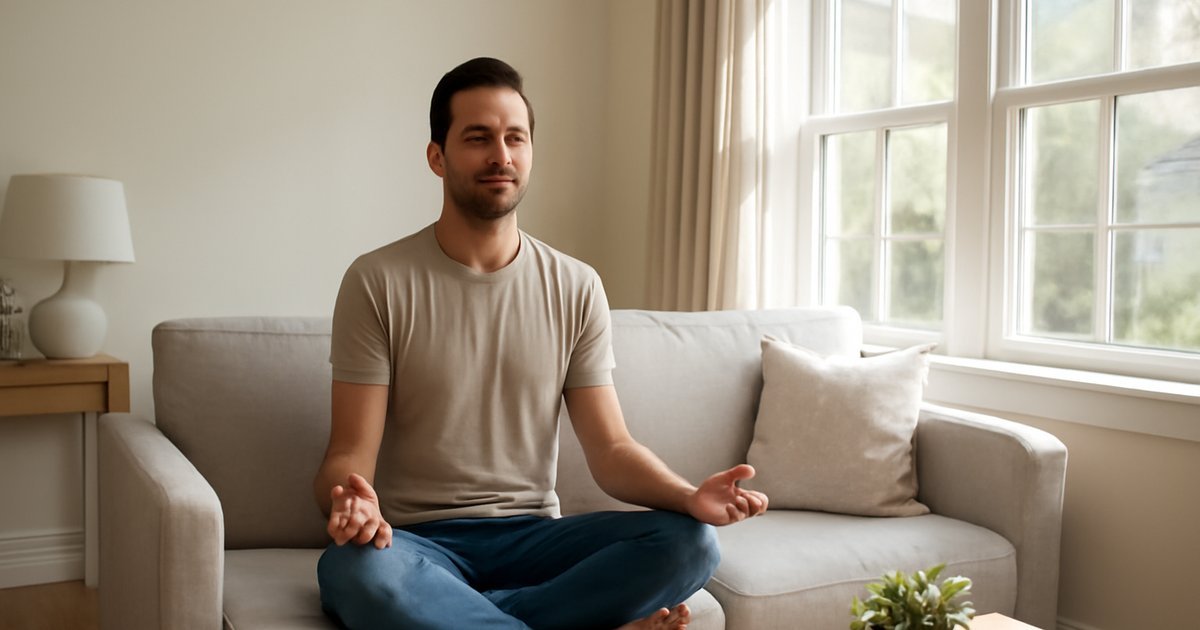
Mindfulness for Stress: Practical Steps That Actually Work
You don’t need an app, a meditation cushion, or an hour of silence — just a few honest minutes and a willingness to try something different.
It’s 3 PM on a Tuesday, your inbox has 47 unread messages, your shoulders are somewhere near your ears, and someone just asked you to "jump on a quick call." Sound familiar? Chronic stress has become so woven into everyday American life that most people don’t even recognize it as stress anymore — they just call it "Tuesday."
According to the American Psychological Association’s most recent Stress in America survey, more than 75% of US adults report experiencing moderate to high levels of stress — and nearly half say stress has negatively affected their physical health. That’s not a productivity problem. That’s a public health issue hiding in plain sight.
Mindfulness-based stress management has moved from fringe wellness practice to one of the most clinically validated tools for reducing anxiety, improving focus, and reclaiming a sense of calm in a noisy world. But there’s a lot of confusion about what mindfulness actually is, how to do it, and why most people quit before it works.
This guide cuts through the noise. You’ll get real science, practical techniques, common pitfalls, and a clear path forward — whether you’re a total beginner or someone who tried mindfulness once, got bored, and moved on.
Why Mindfulness for Stress Management Matters More Than You Think
Stress is not just an emotional inconvenience — it’s a physiological cascade. When your brain perceives a threat (real or imagined), your hypothalamus triggers a release of cortisol and adrenaline. Your heart rate climbs, digestion slows, and your prefrontal cortex — the part responsible for clear thinking and decision-making — becomes less active. Your body is literally designed to prioritize survival over strategy when you’re stressed.
The problem? Modern stressors — deadlines, social media, financial pressure, relationship friction — don’t have an "off switch." Unlike our ancestors who stressed about predators and then returned to calm, we stress about emails at midnight and work presentations during dinner. The system designed to save us from threats is now running on a near-constant low hum, and over time, that takes a serious toll.
Research published in JAMA Internal Medicine analyzed 47 clinical trials involving mindfulness meditation and found clinically meaningful improvements in anxiety, depression, and pain. The study noted that mindfulness produced moderate evidence of improvement in stress — comparable to the effects seen with antidepressant medications in mild-to-moderate cases, without the side effects.
More importantly for your daily life: mindfulness doesn’t require you to clear your schedule. Even brief, consistent practice reshapes how your nervous system responds to stressors over time. You don’t become stress-free. You become more resilient to stress — and there’s a meaningful difference.
The Science Behind Mindfulness: How It Actually Works
Here’s the myth worth busting first: mindfulness is not about emptying your mind. That’s one of the biggest misconceptions that causes people to quit early. Your brain generates thousands of thoughts per day — expecting them to stop is like expecting your heart to stop beating during meditation. The practice is about noticing your thoughts without getting tangled in them.
Neurologically, mindfulness practice has measurable effects on brain structure and function. A landmark study out of Harvard — published in Psychiatry Research — found that participants who completed an eight-week Mindfulness-Based Stress Reduction (MBSR) program showed increased gray matter density in the hippocampus (associated with memory and emotional regulation) and decreased gray matter density in the amygdala (the brain’s alarm center). In plain terms: regular mindfulness practice literally quiets the part of your brain that triggers panic responses.
The mechanism works through what researchers call "attentional regulation." By repeatedly bringing your focus back to the present moment — a breath, a sound, a sensation — you’re training your brain to interrupt automatic thought loops. Over weeks and months, that becomes your default. You start catching the spiral before it swings.
There’s also strong evidence for what mindfulness does to cortisol. A meta-analysis published in the journal Health Psychology Review found that mindfulness-based interventions significantly reduced salivary cortisol levels in healthy adults under stress. Lower cortisol means better sleep, improved immune function, and less systemic inflammation — all of which compound positively over time.
One important caveat: results vary based on frequency, consistency, and individual baseline. People dealing with trauma, clinical anxiety, or PTSD may find mindfulness more challenging and should work with a licensed therapist who specializes in trauma-informed approaches before diving in independently.
How to Get Started: Practical Mindfulness Steps for Real People
You don’t need to meditate for 45 minutes at sunrise. Research supports even five to ten minutes of daily practice producing measurable benefits over eight weeks. Here’s how to build the habit without making it another thing on your to-do list.
Beginner Level: Start Where You Are
- Try the 5-4-3-2-1 grounding technique. When stress spikes, name 5 things you see, 4 you can touch, 3 you can hear, 2 you can smell, 1 you can taste. This activates your senses and pulls your nervous system out of fight-or-flight mode within minutes.
- Start with a one-minute breath focus. Set a timer for 60 seconds. Breathe in for 4 counts, hold for 4, exhale for 6. Repeat. That’s it. Do this once in the morning before you check your phone.
- Practice "mindful transitions." Before switching tasks — closing your laptop, walking from one room to another, sitting down for a meal — pause for three slow breaths. This creates micro-recovery moments throughout your day. You can also pair this with structured breathwork techniques to deepen the effect.
Intermediate Level: Building a Practice
- Use a body scan. Spend 10 minutes lying down or seated, slowly moving your attention from your feet to the top of your head. Notice tension, warmth, or discomfort without trying to fix it. This activates the parasympathetic nervous system and is especially effective before bed. Pairing this with strong sleep hygiene habits can significantly reduce nighttime cortisol spikes.
- Try MBSR-style seated meditation. Eight to ten minutes of focused breathing with guided return to the breath whenever your mind wanders. Apps like Insight Timer or Calm offer free beginner programs worth exploring.
- Journal for two minutes post-session. Write what you noticed. This adds cognitive processing to somatic practice and reinforces the habit loop.
Advanced Level: Integration and Depth
- Attend a Mindfulness-Based Stress Reduction (MBSR) program. The original eight-week curriculum developed by Dr. Jon Kabat-Zinn at the University of Massachusetts Medical School is available online and in-person across the US. Clinical evidence for MBSR is among the strongest in the field.
- Practice open monitoring meditation. Rather than focusing on one anchor (like breath), observe the entire field of consciousness — thoughts, sounds, feelings — without latching onto any one thing. This requires more experience but produces deeper attentional flexibility.
Common Mistakes That Sabotage Mindfulness Progress
Most people don’t fail at mindfulness because they’re doing it wrong. They fail because they’ve been set up with unrealistic expectations. Here are the most common traps — and how to get out of them.
Mistake 1: Judging yourself for having thoughts. The whole practice is about noticing thoughts, not eliminating them. When you catch yourself thinking during meditation and feel frustrated, you’ve actually succeeded — you noticed. The return to focus IS the exercise. Think of it as a mental rep, not a failure.
Mistake 2: Inconsistency masked as "waiting for the right moment." The research on mindfulness is clear: frequency matters more than duration. Three minutes daily beats thirty minutes once a week. Anchor your practice to an existing habit — morning coffee, brushing teeth, the commute home — so it stops needing willpower to initiate.
Mistake 3: Expecting immediate results. Neurological change takes time. Studies typically show meaningful outcomes after six to eight weeks of consistent daily practice. Many people quit around week two or three because they don’t feel different yet — right before the compounding effects begin. Set a realistic 60-day trial before evaluating whether it’s working.
Mistake 4: Treating it as a crisis tool only. Mindfulness is most effective as a daily maintenance habit, not just an emergency response. If you only try to meditate when you’re already in crisis mode, the practice is much harder and the results are inconsistent. Build the foundation when the weather is calm.
Mistake 5: Skipping the body. Mindfulness isn’t purely mental. Stress lives in the body — tense shoulders, shallow breathing, clenched jaw. Practices that integrate body awareness, like progressive muscle relaxation or the body scan, tend to produce faster relief for people with high physical stress responses. Don’t skip the somatic layer.
What to Eat (and Avoid) to Support Your Stress Response
Mindfulness works even better when your nervous system has the nutritional raw materials it needs to self-regulate. Stress depletes certain nutrients rapidly — and most Americans aren’t getting enough of them to begin with.
Prioritize these:
- Magnesium-rich foods: Magnesium plays a direct role in regulating the hypothalamic-pituitary-adrenal (HPA) axis — the stress response system. The USDA reports that nearly half of US adults consume less than the recommended daily amount (310-420 mg). Load up on dark leafy greens, pumpkin seeds, black beans, and almonds.
- Omega-3 fatty acids: A study published in JAMA Network Open found that omega-3 supplementation reduced perceived stress and inflammation markers in medical students during high-stress periods. Fatty fish (salmon, sardines, mackerel), walnuts, and flaxseed are top sources. Aim for at least two servings of fatty fish per week, per American Heart Association guidelines.
- Fermented foods: The gut-brain connection is real and research-backed — your gut produces roughly 90% of your body’s serotonin. A diverse microbiome supports emotional resilience. Include yogurt with live cultures, kefir, kimchi, and sauerkraut regularly. You can learn more about how this connection works in our deep dive on the gut-brain connection and mood.
- Complex carbohydrates: Oats, sweet potatoes, and whole grains support steady serotonin production and prevent blood sugar swings that amplify stress reactivity.
Limit or avoid:
- Caffeine after 2 PM: Caffeine has a half-life of five to six hours and can elevate cortisol and disrupt sleep architecture — compounding next-day stress reactivity.
- Ultra-processed foods and added sugars: These drive systemic inflammation, which research increasingly links to anxiety and mood instability. The Academy of Nutrition and Dietetics recommends limiting added sugars to less than 10% of total daily calories.
- Alcohol as a coping mechanism: While alcohol may feel like it reduces stress in the short term, it disrupts REM sleep and elevates cortisol levels the following day — creating a stress rebound effect.
How Long Until You See Results — and What to Track
Mindfulness is not a quick fix, but it’s also not as slow as people assume. Here’s a realistic timeline based on research:
Week 1-2: You’ll likely feel more aware of how stressed you actually are — which can initially feel worse. This is normal. Awareness precedes change.
Week 3-4: Many people begin noticing they catch stress earlier — before it spirals. Sleep may start to feel slightly more restorative. Reactions to common stressors may feel less automatic.
Week 6-8: This is when most clinical studies observe statistically significant reductions in perceived stress, anxiety symptoms, and cortisol levels. Consistency through this window is the critical variable.
What to track:
- Perceived Stress Scale (PSS) — a validated 10-question self-report tool available free online; complete it at baseline and again at 30 and 60 days
- Sleep quality — note how quickly you fall asleep and whether you wake at night
- Physical tension markers — jaw, shoulders, chest tightness before and after sessions
- Reactivity events — track how often a stressor triggers a disproportionate response
When to reassess or seek professional help: If after eight to ten weeks of consistent practice you see no improvement — or if your stress is accompanied by persistent panic attacks, inability to function at work, or physical symptoms — it’s time to consult a licensed therapist, particularly one trained in Mindfulness-Based Cognitive Therapy (MBCT) or MBSR.
Frequently Asked Questions
Q: Is mindfulness the same as meditation?
Mindfulness is the broader capacity to maintain present-moment awareness. Meditation is one of the most effective tools for developing it — but mindfulness can also be practiced while walking, eating, or doing dishes. Think of meditation as formal training and mindfulness as the skill you take everywhere.
Q: Can mindfulness actually help with physical stress symptoms like headaches or muscle tension?
Yes, and research supports this. Mayo Clinic notes that mindfulness-based stress reduction has shown effectiveness for tension headaches, chronic pain, and somatic symptoms related to stress. The body-scan practice in particular targets physical tension patterns directly.
Q: How long should I meditate each day to see results?
Research suggests as little as five to ten minutes daily can produce meaningful benefits over six to eight weeks. The key variable is consistency, not duration. Starting small and building gradually outperforms starting with ambitious sessions that you can’t maintain.
Q: Does mindfulness work for everyone?
Most people benefit, but individual results vary significantly. People with a history of trauma, dissociation, or certain anxiety disorders may find some mindfulness practices activating rather than calming. A trauma-informed approach — ideally with professional guidance — is advisable in those cases.
Q: What’s the difference between mindfulness and just "relaxing"?
Relaxation reduces arousal in the moment. Mindfulness trains your brain to change how it responds to stressors over time. Watching TV may help you unwind, but it doesn’t build the attentional regulation and emotional resilience that consistent mindfulness practice develops neurologically.
You Don’t Have to Overhaul Your Life to Start
Here’s the truth about mindfulness: the version that actually works isn’t the Instagram-perfect version with candles and silence and two hours of free time. It’s the three-minute version you do consistently, on a Tuesday, when everything feels like too much.
Start with one technique from this guide. Practice it daily for two weeks before adding anything else. Track how you feel — not against some ideal, but against where you started. Small, consistent steps compound into genuine resilience, and resilience is what makes the hardest days manageable.
Your next step? Choose one beginner technique from the list above and practice it tomorrow morning before you check your phone. That’s it. That’s the whole plan for today.
This article is for informational and educational purposes only. The content is not intended to replace professional medical, nutritional, or fitness advice. Always consult a qualified healthcare provider, registered dietitian, or certified fitness professional before starting a new health program or making significant changes to your lifestyle.
Content reviewed by our wellness editorial team, with references to peer-reviewed research and guidelines from leading health organizations.