Men’s Bone Health: How to Prevent Osteoporosis Naturally
Most men don’t think about their bones until something breaks — but the habits you build in your 30s and 40s determine whether your skeleton stays strong into your 60s and beyond.
Picture this: you’re 52, you slip on a wet floor, and what should be a minor stumble turns into a fractured wrist — and a sobering diagnosis. Osteoporosis. You’d always assumed that was a women’s problem. You were wrong, and so are millions of American men who unknowingly let their bone density decline for decades without a single symptom.
According to the National Institutes of Health (NIH), roughly 2 million American men currently have osteoporosis, and another 12 million are at risk. Yet bone health in men is dramatically underscreened and undertreated. Men are less likely to be tested, less likely to receive treatment after a fracture, and less likely to survive complications from a hip fracture than women.
The good news? Bone loss is not inevitable. The right combination of nutrition, resistance training, lifestyle habits, and early awareness can preserve — and in some cases partially restore — bone density at almost any age. This guide gives you exactly what you need to know to take men’s bone health seriously, starting today.
Why Men’s Bone Health Matters More Than You Think
Men build more bone mass during adolescence and early adulthood than women do, which creates the illusion of lifelong protection. But after peak bone mass is reached — typically around age 30 — the body begins a slow, silent process of bone resorption that accelerates in your 50s and 60s.
What makes this especially concerning for men is the delay in diagnosis. Women are routinely screened for bone density loss after menopause, but men often aren’t screened until after a fracture has already occurred. By then, significant bone mass may already be gone.
A landmark study published in the Journal of Bone and Mineral Research found that men who sustain a hip fracture have a one-year mortality rate of approximately 37% — substantially higher than women in the same age group. This is partly due to delayed diagnosis, lower baseline fitness at time of injury, and complications from immobility.
Beyond fractures, low bone density is directly linked to reduced physical function, chronic back pain from vertebral compression, and a measurable decline in quality of life. For men who value staying active and independent well into their later decades, bone health isn’t optional — it’s foundational.
Several risk factors are specific to men and often overlooked. Low testosterone levels, long-term use of corticosteroids, excessive alcohol consumption, smoking, sedentary lifestyle, and low calcium or vitamin D intake all contribute to accelerated bone loss. Conditions like celiac disease, inflammatory bowel disease, and type 2 diabetes also affect bone density in ways that men’s routine checkups rarely address.
The Science Behind Bone Loss in Men
Your bones are not static — they’re living tissue in a constant state of renewal. Specialized cells called osteoblasts build new bone, while osteoclasts break down old bone. In younger years, this process favors building. As you age, the balance tilts toward breakdown.
In men, testosterone plays a critical role in maintaining bone density. But here’s a detail most people miss: testosterone’s effect on bone actually works largely through its conversion to estrogen via an enzyme called aromatase. Yes, men need estrogen too — specifically to regulate osteoclast activity. When testosterone drops (whether from age, hypogonadism, or certain medications), bone remodeling shifts toward net loss.
A common myth is that osteoporosis is only relevant after age 65. In reality, the rate of bone loss in men accelerates significantly between 50 and 70, and the habits you maintain through your 30s and 40s directly determine how much bone mass you have left when that decline begins. Think of peak bone mass as a savings account — the more you deposit early, the better positioned you are to handle later withdrawals.
Research published in JAMA Internal Medicine confirms that weight-bearing and resistance exercise significantly stimulate osteoblast activity at any age, not just during youth. This means building and protecting bone density is an active, ongoing process — not something that simply happens automatically or stops being relevant after 40.
Calcium and vitamin D are the most well-known bone nutrients, but the full picture is more complex. Magnesium, vitamin K2, phosphorus, and protein all play documented roles in bone matrix formation and calcium regulation. The Academy of Nutrition and Dietetics emphasizes that bone health is a systems-level outcome — not something you achieve with a single supplement.
How to Get Started: Practical Steps to Protect Your Bones
The following framework is built for men who want to take actionable steps — whether you’re 28 or 58.
Step 1 — Know your baseline. If you’re over 50, or have any risk factors (smoking history, low testosterone, corticosteroid use, family history of fractures), ask your doctor about a DEXA scan. This painless test measures bone mineral density (BMD) and gives you a T-score — the standard clinical marker for bone health.
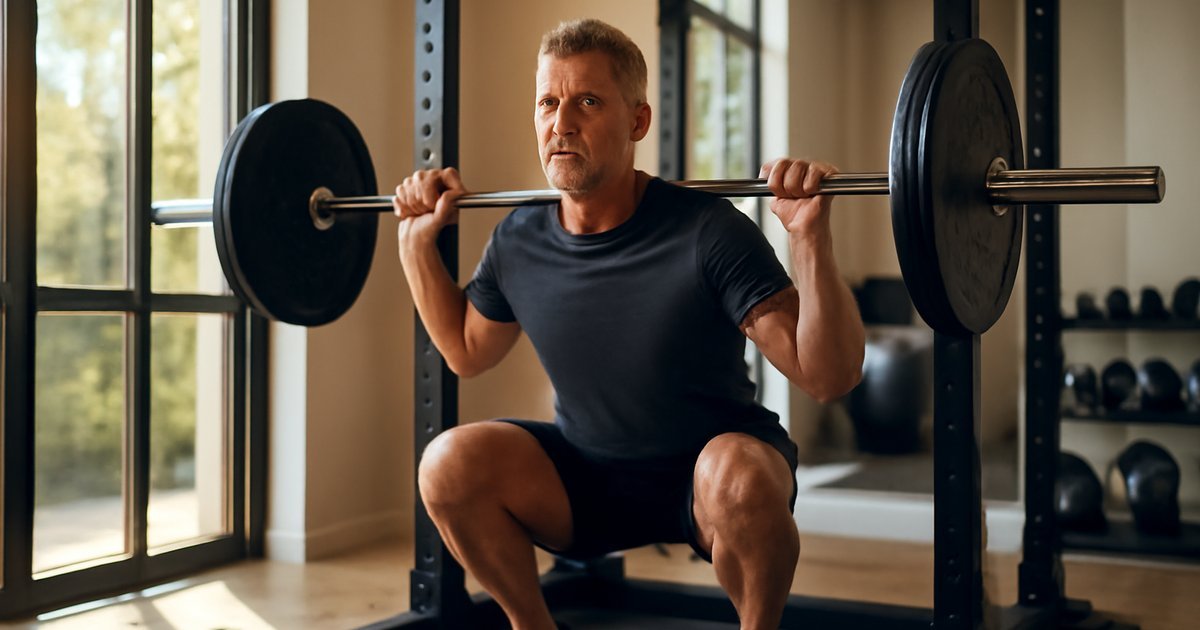
Step 2 — Build resistance training into your week. Weight-bearing and resistance exercises are the most powerful non-pharmaceutical tools for bone density. Aim for at least 2-3 sessions per week. Compound movements like squats, deadlifts, lunges, and rows apply mechanical stress to the skeleton, triggering bone-building responses.
Beginner: Bodyweight squats, wall push-ups, resistance band rows — 2 sets of 10-12 reps, twice per week.
Intermediate: Barbell squats, Romanian deadlifts, bent-over rows — 3 sets of 8-10, three times per week.
Advanced: Progressive overload programs with periodization — work with a certified trainer to safely increase load over time.
Step 3 — Optimize calcium and vitamin D intake. The NIH recommends 1,000 mg of calcium daily for men aged 19-70, increasing to 1,200 mg after 70. For vitamin D, 600-800 IU is the standard recommendation, though many clinicians suggest 1,000-2,000 IU for men with low sun exposure — always based on blood levels.
Step 4 — Reduce alcohol and eliminate smoking. Both directly suppress osteoblast activity and impair calcium absorption. Even moderate alcohol (more than 2 drinks daily) has been associated with measurable reductions in bone density over time, according to research from the American Journal of Clinical Nutrition.
Step 5 — Include impact activity. Jogging, jumping rope, tennis, and hiking all place beneficial stress on bones that lower-impact activities like swimming or cycling don’t provide. A balanced program includes both resistance training and some form of impact activity.
Common Mistakes That Sabotage Bone Health
Even health-conscious men fall into these traps. Here’s what to watch for — and how to correct course.
Mistake 1 — Relying solely on calcium supplements without vitamin D. Calcium needs vitamin D to be absorbed properly in the gut. Taking high-dose calcium without adequate vitamin D can actually increase the risk of calcification in soft tissues without meaningfully improving bone density. Always pair calcium-rich foods or supplements with vitamin D — and get your D levels checked annually.
Mistake 2 — Skipping protein intake. Many men trying to eat lighter cut back on protein, not realizing that bone matrix is roughly 30% collagen — a protein-dependent structure. Research published in the Journal of Nutrition found that men with higher protein intakes maintained significantly better bone density over five-year follow-up periods. Aim for 1.2 to 1.6 grams of protein per kilogram of body weight daily.
Mistake 3 — Doing only cardio and skipping weights. Running and cycling are excellent for cardiovascular health, but they don’t provide sufficient mechanical load on bones to stimulate meaningful bone formation. Men who rely exclusively on cardio for fitness often reach their 50s with lower bone density than those who incorporated regular resistance training. This is an easy fix — even two days of strength training per week makes a measurable difference.
Mistake 4 — Ignoring bone health until after a fracture. Because osteoporosis has no symptoms until bone breaks, men routinely delay attention until the damage is done. The best time to start protecting your bones was in your 20s. The second best time is right now. Don’t let the absence of pain lull you into a false sense of security.
Mistake 5 — Assuming testosterone therapy alone is enough. While addressing low testosterone is important for bone health, simply starting hormone therapy doesn’t automatically translate to improved bone density without the accompanying lifestyle foundations — nutrition, resistance training, and vitamin D optimization. These work synergistically, not in isolation.
What to Eat (and Limit) for Stronger Bones
Nutrition for bone health goes well beyond a glass of milk. Here’s a practical, evidence-based breakdown.
Prioritize these foods:
- Dairy and fortified alternatives — Plain yogurt (1 cup = ~415 mg calcium), low-fat milk, and fortified oat or almond milk provide absorbable calcium. The USDA Dietary Guidelines recommend 3 servings of dairy or equivalents per day for adults.
- Leafy greens — Kale, bok choy, and broccoli contain calcium plus vitamin K, which supports osteocalcin — a protein critical for bone mineralization. Spinach contains calcium but also oxalates that reduce absorption, so don’t rely on it as your primary source.
- Fatty fish — Salmon (particularly wild-caught) and sardines provide both vitamin D and omega-3 fatty acids, which have been shown to reduce bone resorption. A 3-oz serving of canned salmon with bones provides roughly 180 mg of calcium and significant D3.
- Eggs — The yolk contains vitamin D2 and K2, both of which support bone metabolism.
- Nuts and seeds — Almonds (~75 mg calcium per oz), chia seeds, and pumpkin seeds provide magnesium and phosphorus, essential for bone matrix integrity.
- Legumes — Black beans, lentils, and chickpeas contain calcium, magnesium, and protein — the full trifecta for bone support.
Limit or avoid:
- Excess sodium — High sodium intake increases urinary calcium excretion. The American Heart Association recommends staying under 2,300 mg of sodium per day — a threshold many American men exceed significantly.
- Excessive caffeine — More than 400 mg per day (roughly 4 cups of coffee) has been associated with modest increases in calcium loss. Moderate intake appears safe for most men.
- Alcohol — More than 2 drinks per day suppresses osteoblast activity and impairs liver conversion of vitamin D to its active form.
- Ultra-processed foods — High in sodium, phosphoric acid (from sodas), and low in bone-supporting nutrients. Colas specifically have been associated in multiple observational studies with lower bone density in men.
How Long Until You See Results — and What to Track
Bone density changes slowly. This is important to understand so you stay consistent without expecting instant results.
According to research from the National Osteoporosis Foundation, consistent resistance training combined with optimized nutrition can produce measurable improvements in bone mineral density within 6 to 12 months. These changes are typically modest — 1-3% improvement — but they are clinically meaningful when sustained over time.
What to track:
- DEXA scan results — Get a baseline if you haven’t, then retest every 1-2 years if you’re in a moderate-risk category, or annually if you’ve been diagnosed with osteopenia or osteoporosis.
- Vitamin D blood levels — Optimal range is generally 40-60 ng/mL. Ask your doctor to include this in your annual bloodwork.
- Training progress — Increasing resistance over time (progressive overload) is a reliable proxy for skeletal loading. If your squat or deadlift load is increasing, you’re applying meaningful stimulus to bone.
- Dietary calcium — Use a food tracking app for a week to see if you’re genuinely hitting 1,000 mg daily. Most men fall short without realizing it.
If you’ve been diagnosed with osteoporosis and are not seeing improvement after 12 months of consistent lifestyle changes, your doctor may discuss pharmaceutical options such as bisphosphonates or denosumab. These medications have a strong evidence base and are appropriate when lifestyle measures alone are insufficient. This is not a failure — it’s simply part of a comprehensive care plan.
Also consider talking to your doctor about testosterone levels if you haven’t already. As noted earlier, low testosterone accelerates bone loss in men, and this is an eminently treatable condition in many cases. For more on managing everyday stress — which also affects hormonal balance — see our article on Work-Life Balance: How to Reduce Stress and Reclaim Your Life.
Frequently Asked Questions
Can men actually reverse bone loss, or is it permanent?
Men can partially reverse early bone loss (osteopenia) through consistent resistance training, optimized nutrition, and addressing hormonal deficiencies. Full reversal of advanced osteoporosis is generally not achievable through lifestyle alone, but progression can be significantly slowed or halted. The earlier you start, the better your outcomes.
Is calcium supplementation necessary if I eat a balanced diet?
Not always. If you consistently consume dairy, fortified foods, leafy greens, and legumes, you may meet your calcium needs through diet alone — which is the preferred approach, according to the Academy of Nutrition and Dietetics. Supplementation is most appropriate when dietary intake is consistently insufficient or when a physician identifies a specific need based on bloodwork or bone density results.
Does running help or hurt bone health?
Running is a weight-bearing activity that does support bone health — but it primarily loads the legs and spine, not the upper body. It also doesn’t apply the same degree of bone-building stimulus as progressive resistance training. Running combined with strength training is the most effective combination for overall skeletal health. Results depend on training volume, surface, footwear, and individual biomechanics.
At what age should men start worrying about bone density?
The ideal time to start building bone-protective habits is your 20s and 30s, when you can still increase peak bone mass. But it’s never too late — men in their 50s and 60s who adopt resistance training and improve their nutrition have shown measurable improvements in bone density in multiple clinical studies. If you have risk factors, ask about a DEXA scan starting at age 50.
Can magnesium supplements help with bone health?
Magnesium plays a documented role in bone mineralization and in vitamin D activation. Research suggests that magnesium deficiency is associated with lower bone density. Most men don’t get enough magnesium through diet alone. Supplementing with 300-400 mg of magnesium glycinate or citrate daily is generally well-tolerated and may support bone health as part of a comprehensive approach — but it shouldn’t replace dietary sources or primary interventions like resistance training and calcium.
Start Small, Stay Consistent
You don’t need a complete lifestyle overhaul to protect your bones. You need a handful of consistent, evidence-backed habits that compound quietly over time — just like bone itself.
Start with one change this week. Add a serving of dairy or fortified plant milk. Schedule two strength training sessions. Ask your doctor to check your vitamin D level at your next appointment. These are small pivots that carry outsized long-term impact.
Bone health isn’t glamorous, and it won’t show up on a fitness tracker. But the men who address it proactively are the ones who stay strong, mobile, and independent well into their later decades. That’s a goal worth building toward — one rep, one meal, one good night’s sleep at a time. And speaking of sleep, if you’re not recovering well, your body’s ability to repair bone tissue suffers too — explore our Sleep and Energy: The Healthy Living Guide You Need for practical recovery strategies.
This article is for informational and educational purposes only. The content is not intended to replace professional medical, nutritional, or fitness advice. Always consult a qualified healthcare provider, registered dietitian, or certified fitness professional before starting a new health program or making significant changes to your lifestyle.
Content reviewed by our wellness editorial team, with references to peer-reviewed research and guidelines from leading health organizations including the NIH, Academy of Nutrition and Dietetics, American Heart Association, and National Osteoporosis Foundation.