Dietary Fiber and Gut Health: Your Complete Guide
Most Americans eat less than half the fiber they need every day — and their gut health is quietly paying the price.
Introduction
Picture this: you eat what feels like a reasonably healthy diet, you exercise, you drink your water — but you still feel bloated, sluggish, and oddly tired after meals. Sound familiar? If so, you’re not alone. And the culprit might be something most people barely think about: dietary fiber.
Fiber isn’t exactly a glamorous topic. It doesn’t have the buzz of collagen, the mystique of adaptogens, or the cult following of intermittent fasting. But when it comes to gut health, dietary fiber might be the single most impactful tool available to everyday adults — and most of us are dramatically under-consuming it.
According to the USDA Dietary Guidelines for Americans, the average US adult consumes only about 15 grams of fiber per day, which is less than half of the recommended 25–38 grams. That gap has real consequences — for your digestion, your microbiome, your immune function, and even your mood.
In this guide, you’ll learn exactly what dietary fiber does in your gut, why different types matter, how to start eating more of it without feeling miserable, and what realistic results look like. No gimmicks. Just the science, made practical.
Why Dietary Fiber Matters More Than You Think
Fiber is often reduced to "the thing that keeps you regular." While that’s true, it massively undersells what fiber actually does inside your body.
Your gut is home to trillions of bacteria, fungi, and other microorganisms collectively known as the gut microbiome. These microbes don’t just help digest food — they produce compounds that regulate inflammation, communicate with your brain, influence your immune system, and even affect how efficiently your body stores fat.
Here’s the critical connection: many of your beneficial gut bacteria survive by fermenting dietary fiber. Without enough fiber, those bacteria literally starve — and research shows they may begin feeding on the protective mucus lining of your gut instead. A 2016 study published in the journal Cell Host & Microbe demonstrated exactly this phenomenon in animal models, raising important questions about the consequences of low-fiber diets on gut barrier integrity in humans.
The Academy of Nutrition and Dietetics notes that adequate fiber intake is associated with reduced risk of cardiovascular disease, type 2 diabetes, colorectal cancer, and obesity. That’s not a small list — it’s essentially a checklist of the most common chronic health concerns facing US adults today.
Your daily fiber intake isn’t just a digestive issue. It’s a foundation of long-term wellness.
The Science Behind Fiber: How It Actually Works
Not all fiber is the same, and understanding the difference helps you make smarter choices.
Soluble fiber dissolves in water and forms a gel-like substance in your digestive tract. It slows digestion, helps regulate blood sugar, and feeds beneficial bacteria like Bifidobacterium and Lactobacillus species. Good sources include oats, beans, apples, and flaxseeds.
Insoluble fiber doesn’t dissolve — it adds bulk to stool and speeds transit through the colon. This is the type most directly responsible for bowel regularity. You’ll find it in whole grains, nuts, and the skins of vegetables.
There’s also a third category gaining scientific attention: prebiotic fiber. This refers to specific types of soluble fiber — like inulin and fructooligosaccharides (FOS) — that selectively feed beneficial bacteria. Foods rich in prebiotic fiber include garlic, onions, leeks, asparagus, and bananas.
A common myth is that fiber supplements are just as effective as food-based fiber. The reality is more nuanced. Research published in The Lancet in 2019 — which analyzed 185 prospective studies and 58 clinical trials — found that people who ate naturally high-fiber diets had significantly better health outcomes than those taking fiber in supplement form. Whole food sources come packaged with phytonutrients, vitamins, and compounds that work synergistically.
That said, supplements can be useful tools for specific people in specific situations — more on that shortly.
One more key mechanism: when gut bacteria ferment fiber, they produce short-chain fatty acids (SCFAs), particularly butyrate, acetate, and propionate. Butyrate is the primary fuel source for colon cells, helps maintain the gut lining, and has been shown to have anti-inflammatory properties. A healthy fiber intake directly supports SCFA production — and your gut’s structural integrity depends on it.
How to Get Started: Practical Steps for Every Level
The most important rule about increasing fiber: go slow. Adding too much too fast is the number-one reason people give up on high-fiber eating — and it’s completely avoidable.
For Beginners (currently eating under 15g/day):
- Add one high-fiber food to each meal rather than overhauling your entire diet at once.
- Start with cooked vegetables rather than raw — they’re easier to digest.
- Swap refined grains for whole grains in one meal per day (white rice → brown rice, white bread → 100% whole wheat).
- Add a tablespoon of chia seeds or ground flaxseed to your morning yogurt or smoothie. One tablespoon of chia seeds provides about 5 grams of fiber.
- Increase water intake simultaneously — fiber needs hydration to work properly.
For Intermediate Eaters (currently at 15–25g/day):
- Add half a cup of legumes (black beans, lentils, chickpeas) to one meal per day. Half a cup of cooked lentils delivers about 8 grams of fiber.
- Incorporate prebiotic-rich foods: add raw garlic or onion to sauces, sauté asparagus as a side dish, or slice a slightly unripe banana into your oatmeal.
- Eat the skins of fruits and vegetables where safe to do so — the skin of an apple contains more fiber than the flesh.
- Try a weekly "grain bowl" day using farro, quinoa, or barley as your base.
For Advanced Fiber Eaters (aiming for 35g+ per day):
- Focus on fiber diversity, not just quantity. Research suggests that eating 30 or more different plant foods per week correlates with a more diverse microbiome, according to findings from the American Gut Project.
- Rotate your legumes, grains, seeds, and vegetables weekly.
- Consider tracking fiber intake with a food diary app for a week to identify gaps — most people are surprised by where their blind spots are.
If you’re interested in how probiotics complement a high-fiber diet, our guide on Probiotics for Gut Health: What Really Works walks through exactly which strains and sources make the biggest difference.
Common Mistakes That Sabotage Your Fiber Efforts
These errors are incredibly easy to make — and understanding them is half the battle.
Mistake 1: Ramping Up Too Quickly
Going from 10 grams to 35 grams of fiber in a week is a recipe for bloating, gas, cramping, and giving up. Your microbiome needs time to adapt, and your digestive enzymes need time to adjust. Increase your intake by 3–5 grams per week, and be patient. Discomfort is not failure — it’s transition.
Mistake 2: Not Drinking Enough Water
Fiber absorbs water as it moves through your digestive tract. Without adequate hydration, fiber can actually worsen constipation rather than relieve it. The Mayo Clinic recommends drinking at least 8 cups of water daily — more if you’re significantly increasing your fiber intake or exercising regularly.
Mistake 3: Relying on One or Two Sources
Eating the same fiber sources every day — say, oatmeal every morning and broccoli every night — limits microbial diversity. Different bacteria thrive on different types of fiber. Aim to vary your sources across the week: legumes, whole grains, seeds, fruits, and vegetables each feed different microbial communities.
Mistake 4: Overlooking Processed "High-Fiber" Foods
Many processed foods advertise added fiber (usually inulin or chicory root extract), but these isolated fibers aren’t equivalent to whole food fiber and can cause significant GI distress in large amounts. Check labels and prioritize real food sources first, supplements second.
Mistake 5: Ignoring Digestive Signals
If you experience persistent bloating, pain, or changes in bowel habits regardless of how slowly you increase fiber, that’s a signal worth discussing with a healthcare provider. Conditions like irritable bowel syndrome (IBS) can make high-fiber eating complicated — and some people with IBS do better with low-FODMAP approaches, which limit certain fermentable fibers. Results vary significantly depending on your baseline gut health.
What to Eat: Your Fiber-Rich Food Blueprint
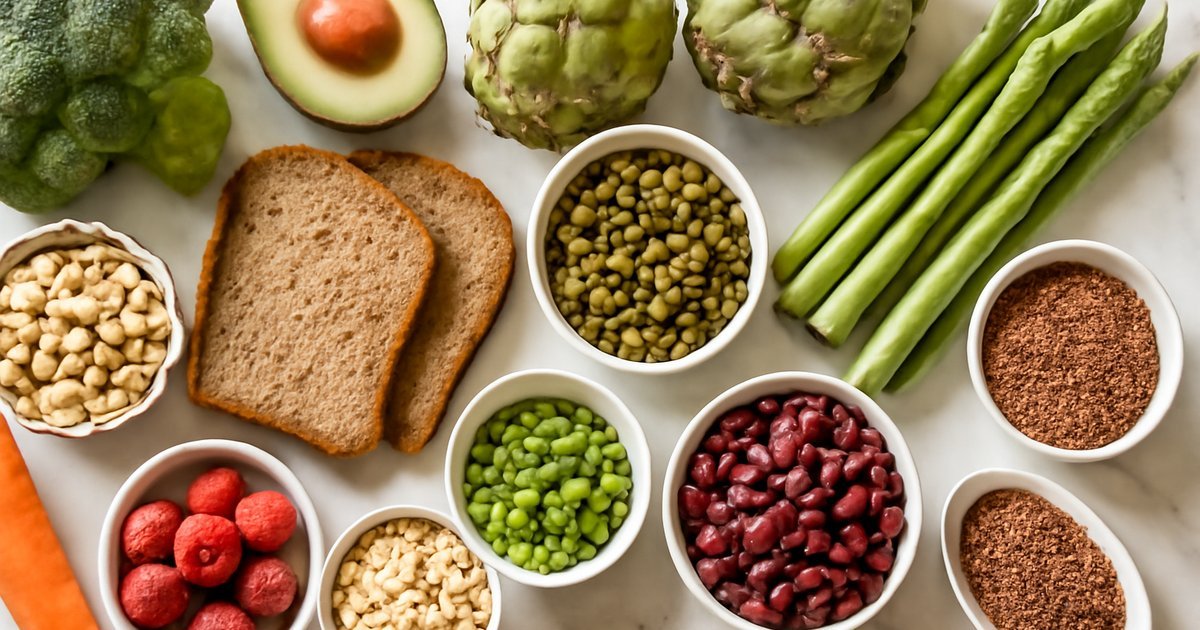
Here’s a practical breakdown of some of the best fiber sources, organized by category. These align with USDA Dietary Guidelines and Academy of Nutrition and Dietetics recommendations.
Legumes (highest fiber density per serving):
- Cooked lentils — 1 cup: ~16g fiber
- Cooked black beans — 1 cup: ~15g fiber
- Cooked chickpeas — 1 cup: ~12g fiber
- Edamame (shelled) — 1 cup: ~8g fiber
Whole Grains:
- Cooked barley — 1 cup: ~6g fiber
- Oats (dry, rolled) — ½ cup: ~4g fiber
- Whole wheat pasta — 1 cup cooked: ~6g fiber
- Popcorn (air-popped) — 3 cups: ~3.6g fiber
Vegetables:
- Artichoke (cooked) — 1 medium: ~10g fiber
- Peas (cooked) — 1 cup: ~9g fiber
- Broccoli (cooked) — 1 cup: ~5g fiber
- Brussels sprouts — 1 cup: ~4g fiber
Fruits:
- Avocado — ½ fruit: ~5g fiber
- Raspberries — 1 cup: ~8g fiber
- Pear (with skin) — 1 medium: ~5.5g fiber
- Apple (with skin) — 1 medium: ~4.4g fiber
Seeds & Nuts:
- Chia seeds — 1 oz (2 tbsp): ~10g fiber
- Ground flaxseed — 2 tbsp: ~4g fiber
- Almonds — 1 oz (23 nuts): ~3.5g fiber
Building your meals around these categories — rather than tracking grams obsessively — is a practical and sustainable approach for most people.
For a deeper look at how diet intersects with energy and cellular function, check out our article on Mitochondrial Health: The Real Key to Aging Well. The connection between a well-fed microbiome and cellular energy production is more direct than most people realize.
How Long Until You See Results — and What to Track
This is where expectations matter. Gut health improvements from fiber happen on a spectrum — some changes are noticeable within days, while others take weeks or months.
Within 1–2 weeks: Most people notice changes in bowel regularity and consistency. Bloating may temporarily increase as your microbiome adjusts — this is normal and usually subsides.
Within 3–4 weeks: Energy levels, post-meal heaviness, and general digestive comfort typically begin to improve. Research from the NIH suggests that meaningful shifts in microbiome composition can begin within two to four weeks of consistent dietary changes.
Within 8–12 weeks: More sustained benefits — including improvements in blood sugar regulation, cholesterol levels, and inflammatory markers — are more likely to become measurable over this timeframe, according to data referenced by Harvard Health Publishing.
What to track:
- Bowel consistency (the Bristol Stool Chart is a clinically used reference tool — types 3 and 4 are considered ideal)
- Frequency of bloating and gas episodes — note patterns, not just presence
- Energy levels and post-meal fatigue
- Skin clarity — the gut-skin axis means microbiome changes sometimes show up on your face first
- Sleep quality — emerging research links microbiome diversity with sleep regulation
When to seek professional guidance: If you’ve been consistently eating adequate fiber for 6–8 weeks and still experience persistent bloating, pain, alternating constipation and diarrhea, or unexplained weight changes, consult a gastroenterologist or registered dietitian. These symptoms may point to conditions that require individualized management beyond dietary changes alone.
Frequently Asked Questions
Can eating more fiber help me lose weight?
Fiber can support weight management by increasing satiety, slowing digestion, and reducing post-meal blood sugar spikes — which may help curb cravings. A 2015 study published in the Annals of Internal Medicine found that simply adding more fiber to your diet (without other changes) led to meaningful weight loss over 12 months. However, fiber is a tool, not a solution — and results vary significantly depending on overall diet and lifestyle.
Is psyllium husk a good fiber supplement?
Psyllium husk is one of the most well-researched fiber supplements and is often recommended by the Mayo Clinic and other institutions for both constipation and cholesterol management. It’s predominantly soluble fiber and generally well-tolerated when taken with plenty of water. That said, it’s best used to complement a food-based fiber strategy, not replace it.
Does cooking destroy fiber?
Not significantly. Cooking can soften fiber and slightly reduce some types, but the overall fiber content of most vegetables, legumes, and grains remains largely intact after cooking. In fact, cooked legumes are often easier on the digestive system than raw ones, making them a better starting point if your gut is sensitive.
Can I eat too much fiber?
Yes — though for most Americans, it’s a rare problem. Extremely high fiber intake (above 70g per day) can interfere with the absorption of certain minerals like calcium, zinc, and iron. It can also cause significant GI distress. Stick to the recommended range of 25–38 grams per day unless otherwise directed by a healthcare provider.
What about fiber and the gut-brain connection?
This is an active and fascinating area of research. SCFAs produced from fiber fermentation can influence the vagus nerve and impact neurotransmitter production, including serotonin — about 90% of which is produced in the gut. While the research is still evolving, adequate fiber intake appears to be one pillar of supporting the gut-brain axis.
Conclusion
Here’s the honest truth: you don’t need a radical overhaul to transform your gut health through fiber. You need consistency, patience, and a willingness to diversify what’s on your plate.
Start with one simple change today — add half a cup of lentils to your lunch, swap your white bread for whole grain, or throw a tablespoon of chia seeds into your morning routine. Small, repeatable shifts compound over time in ways that dramatic 30-day challenges rarely do.
Your gut bacteria are ready to respond. The science is clear. And now you have the roadmap.
Take one step. Build on it. And trust the process.
This article is for informational and educational purposes only. The content is not intended to replace professional medical, nutritional, or fitness advice. Always consult a qualified healthcare provider, registered dietitian, or certified fitness professional before starting a new health program or making significant changes to your lifestyle.
Content reviewed by our wellness editorial team, with references to peer-reviewed research and guidelines from leading health organizations.