Probiotics for Gut Health: What Really Works
You’ve seen the yogurt commercials, stared at rows of supplements at the pharmacy, and maybe even tried a few — but do probiotics actually do anything meaningful for your gut?
Here’s a number that might surprise you: according to the National Institutes of Health, the human gut houses an estimated 38 trillion microbial cells — more than the total number of human cells in your entire body. That community of bacteria, fungi, and other microorganisms is called your gut microbiota, and keeping it balanced is one of the most powerful things you can do for your overall health.
Probiotics — live microorganisms that, when consumed in adequate amounts, provide a health benefit — have gone from a niche wellness topic to a multi-billion-dollar industry. But with so many products, strains, and claims flooding the market, it’s genuinely hard to know what’s real and what’s just clever marketing.
This guide cuts through the noise. You’ll learn exactly what probiotics are, which strains have the strongest research behind them, how to use them effectively, and what common mistakes people make that cancel out any potential benefit. No hype — just what the science actually says.
Why Gut Health Matters More Than You Think
Most people connect the gut to digestion — and that’s fair. But the gut’s influence extends far beyond breaking down food. Research now links the state of your gut microbiome to immune function, mood regulation, skin health, metabolism, and even cardiovascular outcomes.
A 2019 review published in the journal Cell found that gut microbial diversity is one of the strongest predictors of long-term health across multiple body systems. When diversity drops — due to poor diet, antibiotics, chronic stress, or lack of sleep — the gut becomes more vulnerable to inflammation, permeability issues, and opportunistic pathogens.
According to the American Gastroenterological Association, an estimated 60 to 70 million Americans are affected by digestive diseases annually. And that doesn’t account for the millions more who deal with subclinical symptoms: bloating, irregular bowel habits, low energy after meals, or a general sense of not feeling well in their gut.
The gut is also your largest immune organ — roughly 70 percent of your immune system resides there, according to Harvard Health Publishing. When your gut microbiota is out of balance, your immune response can become dysregulated, contributing to chronic inflammation that quietly affects the whole body.
For a deeper look at how your gut communicates with your brain and stress response, this breakdown on Chronic Stress and Cortisol is worth reading — because the two systems are more intertwined than most people realize.
The Science Behind Probiotics: How They Actually Work
Probiotics aren’t magic pills. They work by competing with harmful bacteria for space and resources in the gut lining, producing short-chain fatty acids and other compounds that support the intestinal barrier, and modulating immune signaling. The key word in the clinical definition is adequate amounts — not all probiotic products contain enough live organisms to make a difference.
The most well-researched probiotic genera are Lactobacillus and Bifidobacterium. Within these genera, specific strains — identified by a full name like Lactobacillus acidophilus NCFM or Bifidobacterium longum 35624 — have been studied for targeted benefits. This is where many people go wrong: assuming that any probiotic will do any job.
One common myth is that more is always better. A product with 100 billion CFUs (colony-forming units) isn’t automatically superior to one with 10 billion. What matters is whether those CFUs are the right strain for your goal, whether they survive the acidic environment of the stomach, and whether they reach the colon alive.
A landmark meta-analysis published in JAMA found significant strain-specific differences in outcomes. Lactobacillus rhamnosus GG, for example, showed consistent evidence for reducing antibiotic-associated diarrhea, while Bifidobacterium infantis 35624 showed more meaningful results for IBS-related bloating and discomfort. These are not interchangeable.
If you’ve explored topics like Leaky Gut Syndrome, you already know how the integrity of the intestinal lining plays a central role in gut health — and certain probiotic strains directly support that barrier function.
How to Get Started With Probiotics: Practical Steps
Whether you’re brand new to probiotics or you’ve dabbled without clear results, here’s a strategic approach based on what the research actually supports.
Step 1: Identify your goal. Probiotics aren’t one-size-fits-all. Are you dealing with post-antibiotic gut disruption? Chronic bloating? Irregular digestion? General maintenance? Your goal determines which strain or combination makes sense.
Step 2: Choose strain-specific products. Look for labels that list the full strain name (genus, species, and alphanumeric strain code). If a label just says "Lactobacillus blend," it’s harder to verify what research, if any, applies to that product.
Step 3: Check CFU count and delivery method. Aim for products with 5 to 30 billion CFUs for general gut support — within ranges studied in clinical trials. Look for enteric-coated capsules or verified shelf-stable formulations, which better protect live bacteria from stomach acid.
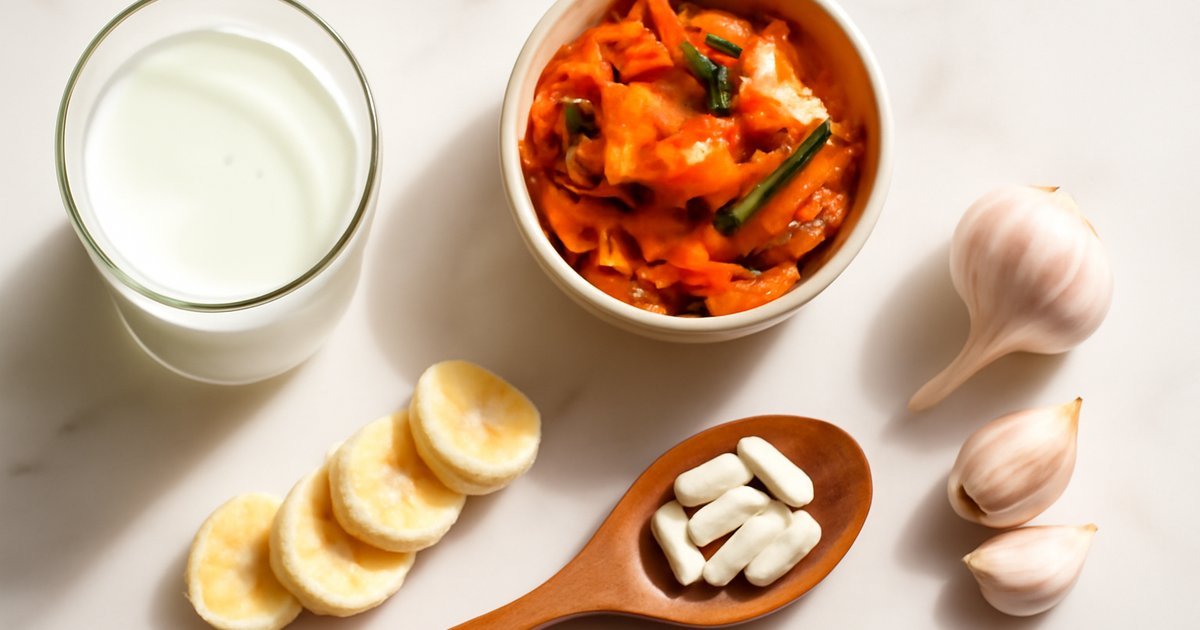
Step 4: Add fermented foods alongside supplements. Whole food sources of probiotics — plain yogurt with live cultures, kefir, kimchi, sauerkraut, miso, tempeh — provide live organisms alongside fiber and nutrients that support microbial diversity in ways that supplements alone don’t replicate. The Academy of Nutrition and Dietetics recommends including fermented foods as part of a balanced dietary pattern.
Beginner option: Start with one serving of plain kefir or yogurt daily and a basic single-strain supplement like Lactobacillus acidophilus. Give it four to six weeks before evaluating.
Intermediate option: Add two to three fermented food servings per week alongside a multi-strain supplement (look for both Lactobacillus and Bifidobacterium strains). Track digestive symptoms in a simple journal.
Advanced option: Work with a registered dietitian to identify specific strains based on your symptom profile. Some practitioners now use microbiome testing to personalize probiotic choices, though the clinical utility of consumer-grade tests is still evolving.
Common Mistakes That Sabotage Probiotic Results
It’s easy to spend money on probiotics and feel like nothing happened — often because of avoidable errors in how they’re selected or used.
Mistake 1: Choosing the wrong strain for your goal. This is the most common and most costly error. Someone buying a probiotic marketed for "immune support" when they actually struggle with bloating and IBS may be using a strain with little to no evidence for their specific concern. Research your strain, not just the brand.
Mistake 2: Expecting results in a few days. Most research on probiotic efficacy measures outcomes at four to eight weeks of consistent use. If you try a product for a week, feel no dramatic change, and quit, you’ve likely not given it enough time to colonize and produce measurable effects. Consistency is non-negotiable.
Mistake 3: Ignoring prebiotic support. Probiotics are live organisms — they need to eat. Prebiotics (non-digestible fibers found in foods like garlic, onions, leeks, asparagus, oats, and bananas) feed beneficial bacteria and dramatically improve probiotic survival and function. Taking a probiotic while eating a low-fiber diet is like planting seeds in dry concrete.
Mistake 4: Storing probiotics incorrectly. Many probiotic strains are sensitive to heat and moisture. Leaving a refrigerated probiotic on a warm counter for weeks can significantly reduce viable CFU counts. Always follow storage instructions — and check that the CFU count listed is guaranteed at the expiration date, not just at manufacturing.
Mistake 5: Expecting probiotics to compensate for a poor diet. No supplement overrides a diet high in ultra-processed foods, refined sugar, and low fiber. The USDA Dietary Guidelines consistently emphasize dietary patterns as the foundation — probiotics work best as a complement to whole food choices, not a substitute.
What to Eat to Support Probiotic Effectiveness
Probiotics thrive in a gut environment that’s rich in diverse fiber and low in the compounds that disrupt microbial balance. Here’s what to prioritize — and what to pull back on.
Eat more of:
- Fermented foods: Plain yogurt (look for "live and active cultures" on the label), kefir (8–12 oz daily is a common studied intake), kimchi, sauerkraut, miso, and tempeh. Aim for at least one serving per day.
- Prebiotic-rich vegetables and fruits: Garlic, onions, leeks, asparagus, artichokes, green bananas, and oats. Even half a cup of cooked oats provides meaningful beta-glucan fiber.
- Diverse plant foods: Research from the American Gut Project (published in mSystems) found that people who consumed 30 or more different plant foods per week had significantly higher gut microbial diversity than those eating 10 or fewer.
- Polyphenol-rich foods: Blueberries, dark chocolate (70 percent cacao or higher), green tea, and extra-virgin olive oil feed beneficial bacteria and have anti-inflammatory effects in the gut.
Reduce or minimize:
- Ultra-processed foods: Emulsifiers like carboxymethylcellulose and polysorbate-80 (common in packaged snacks and dressings) have been shown in animal studies to disrupt the mucosal layer of the gut.
- Excessive alcohol: Even moderate chronic alcohol intake alters microbial composition and increases intestinal permeability, according to research published in Alcohol Research: Current Reviews.
- High added sugar intake: Feeds pathogenic bacteria and yeasts while suppressing beneficial strains. The American Heart Association recommends no more than 25 grams of added sugar per day for women and 36 grams for men.
How Long Until You See Results — and What to Track
Realistic timelines matter. If you go in expecting overnight changes, you’ll quit too early — and miss real improvements that develop gradually.
Weeks 1–2: Some people notice initial GI changes — either an improvement in regularity or, temporarily, some extra gas as the gut microbiome adjusts. This is generally normal and settles down. A 2021 review in Nutrients noted that early digestive adjustments are common within the first two weeks of starting probiotics.
Weeks 3–6: This is typically when more consistent improvements in bloating, bowel regularity, and general digestive comfort become noticeable. If you’re using probiotics for antibiotic recovery, most studies show meaningful restoration of microbial populations within four to six weeks post-antibiotic course.
Weeks 8–12: For goals like immune support, mood stabilization via the gut-brain axis, or managing IBS symptoms, the most robust clinical studies run for eight to twelve weeks before measuring primary outcomes. Results vary significantly based on your baseline microbiome, diet, sleep quality, and stress levels.
What to track: Keep a simple daily log noting bloating frequency and intensity (rate 1–5), bowel movement consistency (the Bristol Stool Chart is a useful clinical reference), energy after meals, and any digestive discomfort. Patterns over weeks are more meaningful than day-to-day fluctuations.
When to reassess: If you’ve been consistent for eight weeks with no noticeable change, consult a registered dietitian or gastroenterologist. There may be an underlying issue — like SIBO (small intestinal bacterial overgrowth) — where certain probiotics can actually worsen symptoms and a different clinical approach is needed.
Frequently Asked Questions
Can I take probiotics every day long-term?
For most healthy adults, daily probiotic use from food or supplements appears safe with no known long-term risks. However, individuals with compromised immune systems, serious illness, or recent surgery should consult a physician before starting any probiotic regimen. The Mayo Clinic notes that probiotics are generally well-tolerated in healthy populations over extended periods.
Should I take probiotics with food or on an empty stomach?
This depends on the strain. Some strains, including Lactobacillus species, survive better when taken with a meal containing some fat, which buffers stomach acid. Others are formulated to be taken on an empty stomach. Always follow the product’s specific guidance and look for enteric-coated capsules for better acid resistance regardless of timing.
Do probiotics help with weight loss?
The evidence here is preliminary and far from conclusive. Some studies suggest certain strains — particularly Lactobacillus gasseri — may modestly reduce belly fat in specific populations, but the effect sizes are small and highly variable. Probiotics are not a weight management strategy on their own. Results vary significantly depending on diet, activity level, and individual metabolic factors.
Are expensive probiotics always better?
Not necessarily. Price reflects brand, marketing, and sometimes refrigeration logistics — not always clinical efficacy. What matters is strain specificity, CFU viability at expiration, and third-party testing. Look for products verified by NSF International, USP, or ConsumerLab for quality assurance, regardless of price point.
Can probiotics help with anxiety or mood?
Emerging research on the gut-brain axis is genuinely exciting here. A 2019 study published in Frontiers in Psychiatry found that multi-strain probiotic supplementation over eight weeks was associated with modest reductions in self-reported anxiety and depressive symptoms in healthy adults. However, this is a developing field — probiotics should not replace evidence-based mental health treatment, but may serve as a supportive adjunct. Always work with a qualified provider if anxiety or mood is a primary concern.
Start Simple, Stay Consistent
You don’t need a 50-strain supplement or a refrigerator full of expensive kefir to meaningfully support your gut. The research is clear on one thing above all else: consistency with a few well-chosen strategies beats sporadic attempts at the perfect protocol.
Start with one fermented food daily. Choose a probiotic with a named strain matched to your specific concern. Add more plant diversity to your plate and reduce the ultra-processed foods that work against your gut. And give it time — because a healthier gut microbiome is built over weeks and months, not days.
Your gut is one of the most dynamic and responsive systems in your body. Small, consistent inputs produce real, measurable shifts — and those shifts ripple outward into energy, immunity, mood, and beyond. Today is a good day to start.
This article is for informational and educational purposes only. The content is not intended to replace professional medical, nutritional, or fitness advice. Always consult a qualified healthcare provider, registered dietitian, or certified fitness professional before starting a new health program or making significant changes to your lifestyle.
Content reviewed by our wellness editorial team, with references to peer-reviewed research and guidelines from leading health organizations.